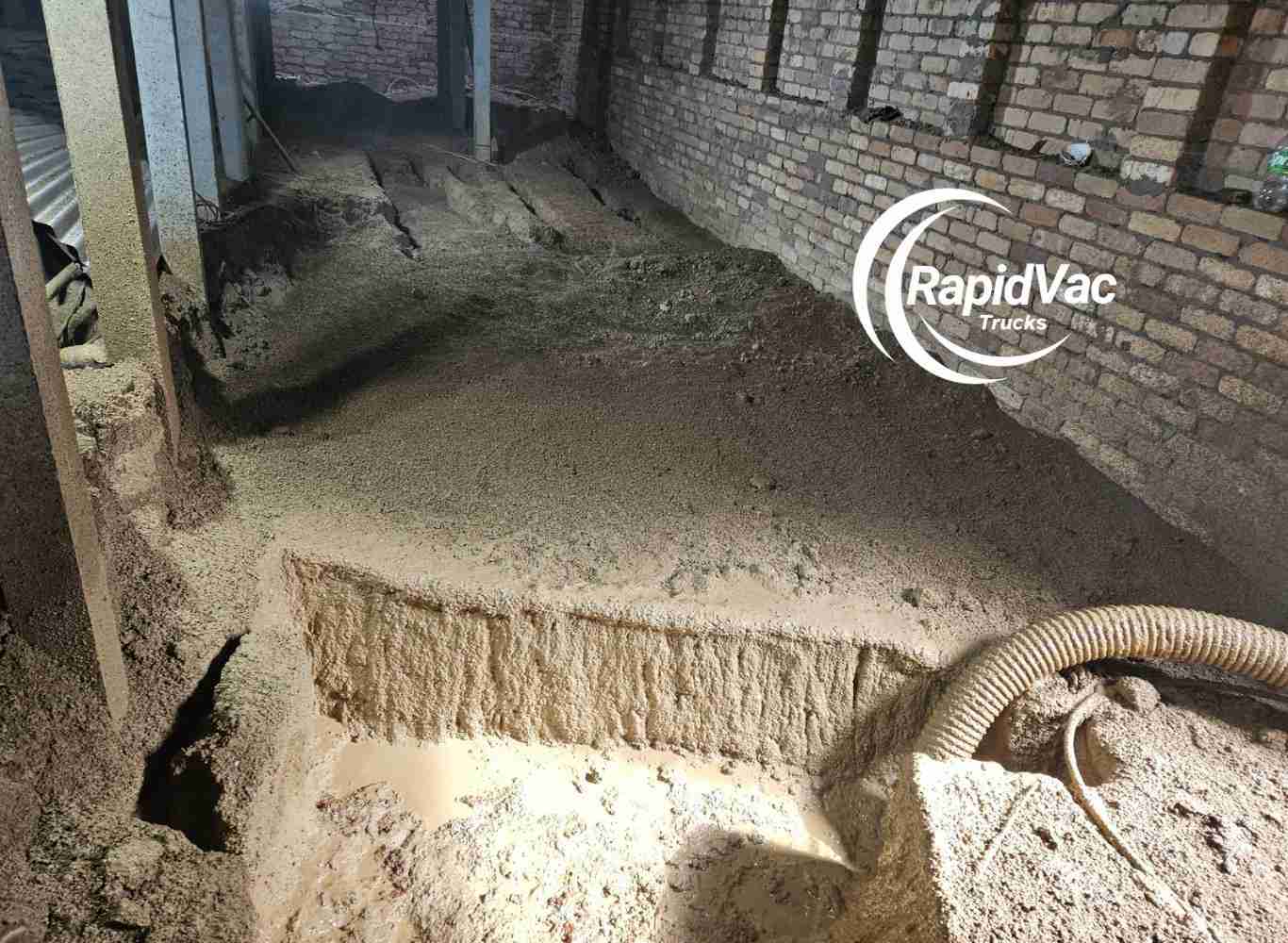
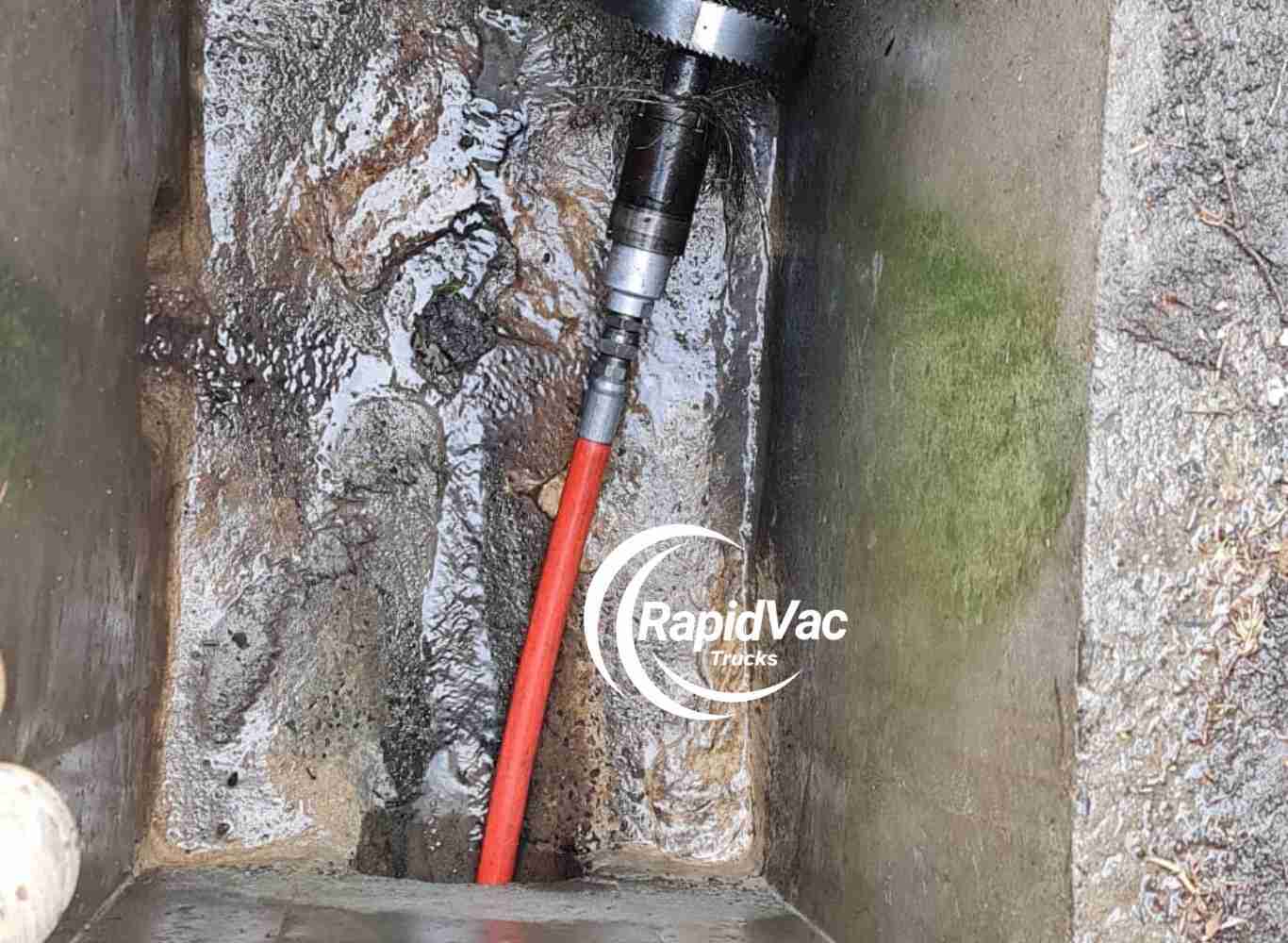
Dewatering means removing unwanted water from an excavation, trench, pit or low area so work can continue. A vac truck suits jobs where the water is mixed with mud, silt or debris, the volume is limited, or the material has to be taken off site. A pump can suit larger volumes of clearer water or water that keeps flowing in. The site decides, not the equipment.
What is dewatering?
Dewatering clears water from a work area so the next task can go ahead. It is commonly needed before:
- Laying concrete
- Plumbing inspections
- Utility trenching
- Installing drainage systems
- Soil remediation
Vac truck or pump: what decides it?
Use these factors as a starting point:
| Factor | Points towards a vac truck | Points towards a pump |
|---|---|---|
| What is in the water | Mud, silt, clay, spoil or debris mixed through it | Mostly clear water |
| Volume and inflow | A defined amount, or a pit that refills slowly | Large volumes, or steady inflow over hours or days |
| Where it goes | The material needs to be collected and taken away | There is an approved place for the water to go |
| Access | A truck can park within hose reach | No truck access, but power and a discharge route are available |
These are guides, not rules. Some sites use both: a pump to manage inflow and a vac truck to clear the sediment left behind.
Where does the water go?
Work out where the water and sediment will end up before anything is pumped or removed. NSW EPA lists blocked stormwater drains, flooding and overflows among the consequences of sediment spills, and asks sites to keep soil, sand and mud out of waterways. Site water is not automatically fit for a stormwater drain. NSW EPA's water pollution guidance explains that the Protection of the Environment Operations Act 1997 provides the framework for managing water pollution in NSW, including urban stormwater runoff.
When a vac truck collects the material, how it is handled depends on what it is. NSW EPA's Waste Classification Guidelines allow liquid and solid fractions to be separated and the solids assessed further. If the water could contain fuel, chemicals or other contaminants, say so up front, because waste consignors must work out whether hazardous waste needs tracking. The team will confirm whether they can collect it and how it will be handled. Collection is covered under liquid waste removal services.
Situations where a vac truck is worth considering for dewatering
- A flooded trench on a small plumbing job
- A waterlogged cable or utility trench
- A soakwell or pit full of wet clay
- A pit that needs water and sediment removed before a concrete pour
- Standing water on an active work area after a storm
If the problem is a blocked stormwater line or pit, drain cleaning may be the better fit. If soil also needs to be dug out once the water is gone, that is vacuum excavation.
Who usually needs dewatering services?
- Civil contractors
- Plumbers
- Builders
- Strata and facilities managers
- Landscapers and concreters
What to tell the team
- Where the water is and roughly how much, with a photo that shows scale.
- Whether it is still flowing in, and from where.
- What is in it: sediment, mud, debris or possible contaminants.
- Truck access and the distance from where the truck can park to the water.
- Your deadline and the work that follows.
The Sydney team operates 24/7. Call on (02) 5302 6020 to talk through the job, hourly rates and an estimate, or send photos, the water source and access details through the contact form. You can also read more about Rapid Vac Trucks Sydney.