
Published rates for vac truck hire start from about $170 an hour plus GST for a small truck and its operator, and a Sydney contractor's cost guide puts bigger trucks and crews at up to about $450 an hour. Most jobs carry a minimum booking of 3 to 4 hours. A short job, such as exposing one service at the kerb, often comes in at around $510 to $1,080 plus GST before disposal, and a full day of trenching with a larger truck comes to roughly $3,400 to $4,400 before GST in the worked example below, waste levy included.
Those figures are typical market rates from national hire-rate guides and a Sydney contractor's 2025 cost guide, not our price list. We work at a competitive hourly rate for vac truck hire in Sydney, and we'll give you that rate and an estimate for your job before anything is booked. This guide shows the typical rates, two worked examples, and what fills the hours and moves the bill, so you can see which parts you control.
Key takeaways
- Typical rates: from about $170 an hour plus GST for a small truck and operator, usually with a 3 to 4 hour minimum. The table below has the detail.
- Time is the main cost. The truck comes with its operator and is booked by the hour, so anything that slows the job adds to the bill.
- Disposal can be a separate line. Spoil and slurry go to a waste facility, and in Sydney the NSW Government's waste levy is usually built into what those facilities charge.
- Permits and traffic control can stop a job. Digging in a Sydney footpath or road needs council approval, and work that affects traffic on a state road needs a Road Occupancy Licence.
- Preparation saves hours. Plans, permits, access and a clear description of the material are the cheapest way to cut the cost.
Typical vac truck hire cost per hour in Sydney
Most of the bill is the hourly rate for the truck and its operator. These are the rates published in national hire-rate guides and in a Sydney contractor's 2025 cost guide, checked in November 2026. They are market figures, not a quote: the truck, the ground and the access on your job decide where it lands.
| What you pay for | Typical cost | What it means for your job |
|---|---|---|
| Small truck (about 3,000 litres) and operator | $170 to $270 an hour plus GST | Potholing and smaller digs |
| Larger truck (6,000 to 7,000 litres) and operator | $200 to $320 an hour plus GST | Longer digs and more spoil between tip runs |
| Bigger trucks and crews (a Sydney contractor's 2025 guide) | $250 to $450 an hour | Rates rise with truck size, crew and location |
| Full day (the same Sydney contractor) | $3,500 to $4,500 a day | Long trenching with a bigger truck or crew |
| Minimum booking | 3 to 4 hours, often counted depot to depot | About $510 to $1,080 plus GST for a small truck |
| Disposal | NSW waste levy of $96.50 to $180.20 a tonne, plus the facility's own charge | See the disposal section below |
| After-hours and emergency work | Quoted job by job | Ask for the after-hours rate when you call |
The guide rates are quoted before GST; the Sydney contractor's figures don't say either way. Travel is usually counted inside the booked hours, but sites more than about an hour from the depot can cost extra, and water can be charged on top of the hourly rate.
What a typical Sydney job costs: two worked examples
Both examples use the guide rates above, so treat them as a guide to the size of the bill.
Example 1: exposing one water service at the kerb. A simple pothole about 1 metre square and 1.5 metres deep in medium soil is typically 1 to 2 hours of digging. That sits inside a 3 to 4 hour minimum, so with a small truck a job like this is usually charged at the minimum: about $510 to $1,080 plus GST, plus disposal of the spoil, which is charged by the tonne. On a footpath, add the council permit and any traffic control, which are covered further down.
Example 2: a full day of trenching along a new conduit route. Say it takes 8 hours with a larger truck. At $200 to $320 an hour, that is about $1,600 to $2,560 plus GST. Say 10 tonnes of standard waste comes out: the NSW waste levy alone on that is $1,802. So the day comes to roughly $3,400 to $4,400 before GST, the facility's own charge, water and permits. A bigger truck or crew costs more; the Sydney contractor's guide above puts a full day at $3,500 to $4,500.
The ground, the access and how far the truck travels to tip all change the hours. Call us for our current rate and an estimate for your site before you book.
What to ask before you book
The hourly rate covers the truck and its operator. Every truck comes with an experienced operator who sets up around your site and runs the water lance, the suction and the tank. The same goes for vacuum excavation, also called hydro excavation: vacuum excavation cost comes down to time on site and where the spoil goes.
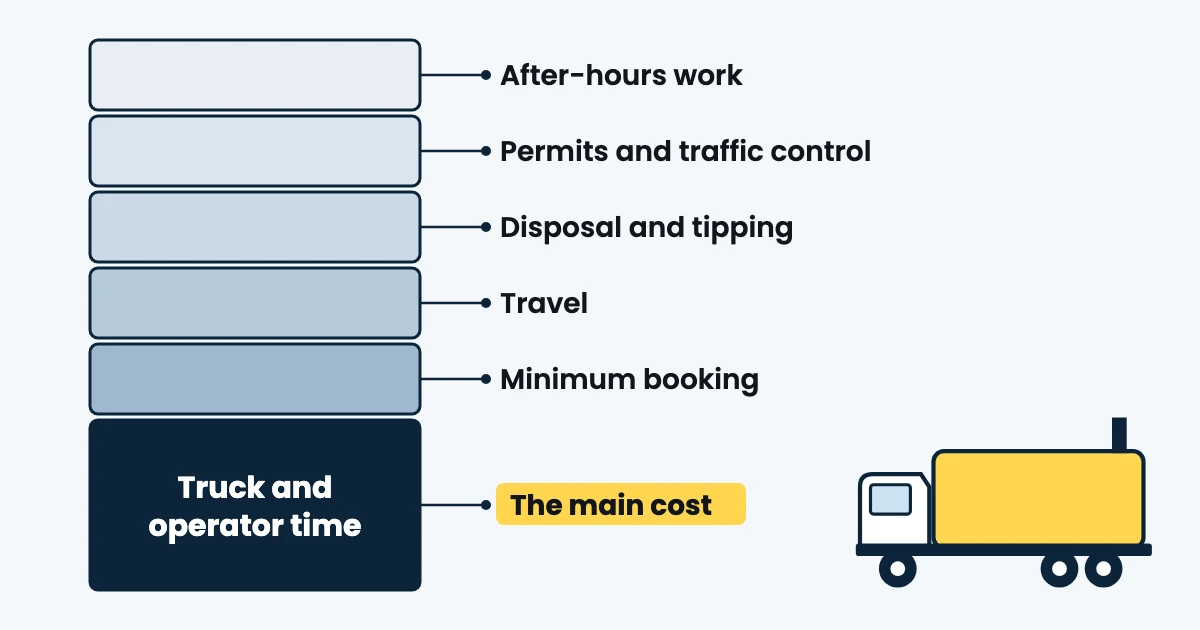
Problems start when a cost line is missed at the quote stage and turns up on the day. When you call, ask:
- When does the clock start and stop, and are set-up and pack-up included?
- Is there a minimum booking, and does it include travel?
- Is tipping included, or charged separately by the tonne?
- Who arranges and pays for permits and traffic control?
- What is the rate for night, weekend or urgent work?
What fills the hours on site
The clock runs while the crew digs, and while the truck is away tipping. A vac truck digs by loosening the ground with pressurised water and lifting the soil and water into its tank by suction. When the tank is full, the truck has to empty it before it can keep digging. On a job with a lot of spoil, that cycle repeats.
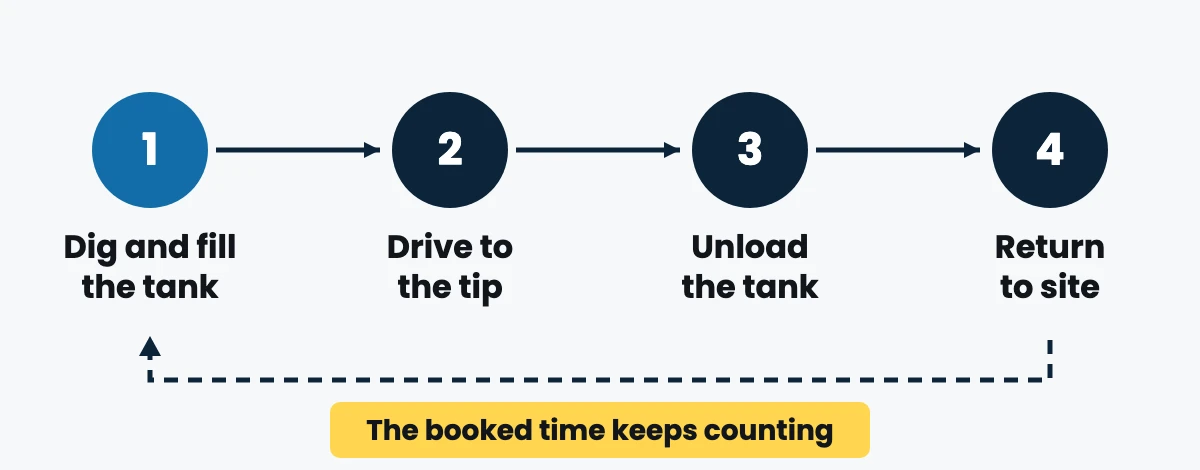
The things that most often stretch the time are the ones the operator cannot see from the quote:
- Access. A truck that cannot park close to the dig needs a longer hose, and a longer run is slower to set up and slower to dig with. Access and hose length are two of the biggest drivers of time on site.
- The ground. Soft soil lifts quickly. Compacted fill, clay, tree roots or rubble take longer to break up.
- How many holes, and how deep. Ten small inspection holes along a fence line take longer than one wide hole of the same volume, because the crew moves and sets up each time.
- Waiting. Time spent waiting for a permit holder, traffic controller, gate key or asset owner representative is still booked time.
Disposal: where the spoil goes, and why it is charged
Disposal can add to the bill, and the material decides by how much. Liquid or slurry has to go somewhere suitable, and that can add disposal costs. SafeWork NSW's excavation code also expects excavation planning to cover transport, haul routes and disposal.
In Sydney, part of that cost is set by the NSW Government. The NSW waste levy is paid on waste received at scheduled waste facilities in the Metropolitan Levy Area, unless an exemption applies. That area takes in Sydney's metropolitan councils, from Penrith and Campbelltown to Sutherland and the Northern Beaches; the Blue Mountains and Wollondilly are in the Regional Levy Area, which has lower rates. The rates for 2026 to 2027, which apply from 1 July 2026, are:
| Material | NSW waste levy, 2026 to 2027 |
|---|---|
| Standard waste (Metropolitan Levy Area) | $180.20 a tonne |
| Virgin excavated natural material (Metropolitan Levy Area) | $162.20 a tonne |
| Trackable liquid waste (applies across NSW) | $96.50 a tonne |
Source: NSW EPA levy rates page. The trackable liquid waste rate is set each quarter. Which one applies depends on how the material is classified. As a guide, 10 tonnes of standard waste carries $1,802 in levy alone, before the facility's own charge, so what you need removed, and how much of it, affects the price.
Two things help us quote disposal accurately:
- Tell us what the material is and where it came from before anything is booked. We don't assume a material can be accepted until we know what it is.
- Flag anything unusual up front. Mention possible contamination, fill, groundwater or asset-owner conditions at the quote stage so they are part of the scope, not a surprise on the day.
If the job is mainly liquid, such as pit or tank contents, see liquid waste removal or drain cleaning for how we handle it.
Permits and traffic control on Sydney streets
On a footpath or road job, the paperwork can decide whether the truck works or waits. Many Sydney vac truck jobs happen on the street: exposing a water, gas, power or telecoms service at the kerb, or digging beside a driveway. Those jobs have rules that private-property jobs do not.
- Council permit to dig. The City of Sydney requires a road opening permit for any intrusive digging in a public road or footpath, including work on water, gas, electricity or telecoms services. The application must be lodged at least 48 hours before the works, excluding weekends and public holidays. Works in December are restricted and assessed case by case. Other Sydney councils run their own permits (North Sydney, for example, requires one for any works on a council footpath or road, including excavation), so check with the council for your street.
- Before the dig. The City's Sydney Streets specification also expects a Before You Dig Australia enquiry and a traffic control plan to be in place.
- Road Occupancy Licence. Transport for NSW requires a Road Occupancy Licence for any activity likely to affect traffic flow, even if the work itself is off the road. Works in the road reserve that affect traffic on a state road, or sit within 100 metres of traffic lights, also need one.
- Restricted periods. Transport for NSW restricts planned work on listed Sydney Metropolitan roads during the busiest times, generally around school and public holidays.
Who arranges these is a pricing question. Ask whether permits and traffic control are in the quote or whether you are expected to have them in place before the truck arrives. Either way, a truck that turns up before the permit or the traffic controller is ready is booked time that achieves nothing. Not sure what your street needs? Call us any time and we'll talk through the permit and traffic control steps while we plan the job.
For example: say you need a water service exposed at the kerb in the City of Sydney before a new driveway goes in. The road opening permit has to be lodged at least 48 hours before the work, not counting weekends and public holidays. The Before You Dig Australia plans and a traffic control plan need to be in place. Then send us the address, the plans, photos of the kerb and a note on the ground, and we can quote the hours and the disposal together.
Pricing a Sydney job? Call (02) 5302 6020 any time, or send the details and photos through the quote form.
Plans, locating and asset-owner conditions
Plans and locating done before the truck arrives stop the crew searching on the clock. SafeWork NSW's excavation code of practice says the person in control of the workplace must take all reasonable steps to get current information about underground services before work starts. It also warns that this information may not be accurate, and describes exposing a short section of a service with water pressure and a vacuum system to check it, often called potholing. That is the work a vac truck does.
The Before You Dig Australia enquiry service is free, and Sydney Water, for one, provides most of its pipe location plans free of charge. Asset owners also add their own conditions:
- Sydney Water asks that you get pipe location details at the planning stage of your project, and that excavations are carried out manually until its pipes and other services are located. Follow each asset owner's own conditions on how its assets are exposed, and tell us about them when you book.
- Jemena, the gas network operator, requires a standby (a Jemena representative on site) for excavation within three metres of a secondary or critical gas main, or for work that could expose its gas assets. If your job needs one, book it before you book the truck.
Where the plans are unclear or the site has private services the plans do not show, service locating or ground penetrating radar before the dig can save our crew from searching hole by hole. Then non-destructive digging confirms what is actually there.

Five ways to keep the bill down
On an hourly booking, time saved on site is money saved once any minimum is covered. The cheapest vac truck job is the one where the truck arrives, sets up once and digs without stopping.
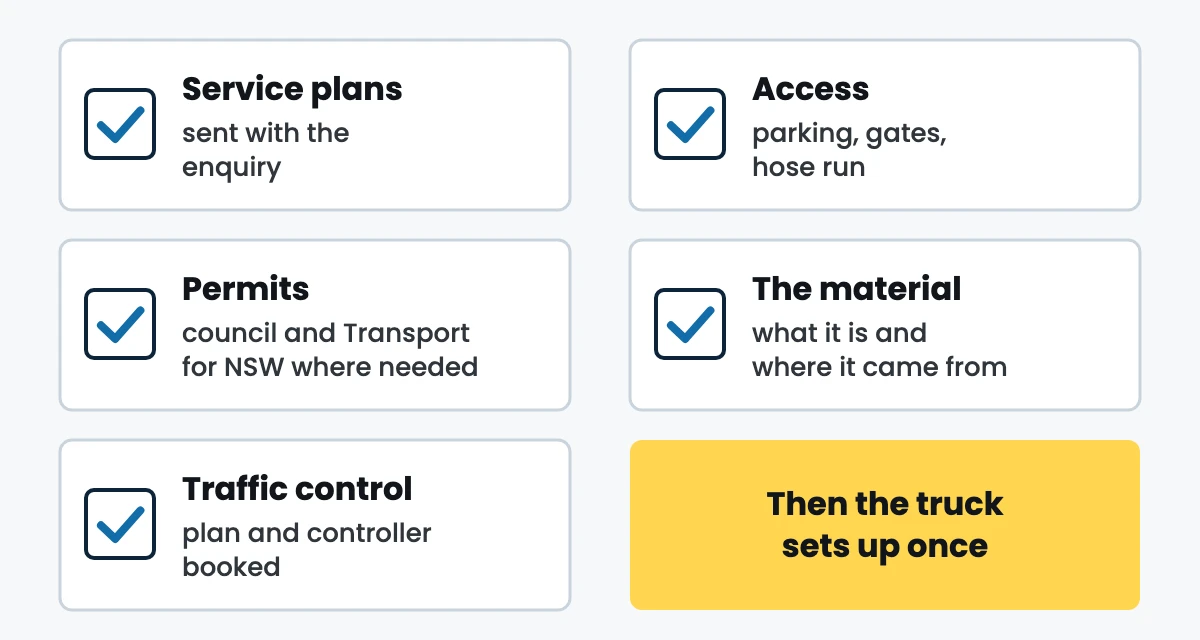
- Have the service plans ready and send them with your enquiry. Mark the area you need opened.
- Sort permits and traffic control first, or confirm in writing that they are part of the quote.
- Clear the access. Note gate widths, overhead clearance, parking and how far the truck will be from the dig.
- Describe the material honestly, including any fill, water or possible contamination.
- Book asset-owner attendance (for example a gas standby) for a time that suits the crew's arrival.
For smaller home jobs, the residential vac truck guide covers the same checks in more detail.
What to send for an accurate estimate
An estimate can only cover what we have been told about. Our quote form asks for your name, phone, email, the job address and a description of the job, with an option to attach photos or a site plan. A useful description covers:
- what you need dug or removed, and why (for example, exposing a water service before a new driveway);
- the number of holes or the length of trench, and roughly how deep;
- the ground and the material, including any fill, water or suspected contamination;
- access: parking, gates, distance to the dig and any height limits;
- whether the work is on a footpath or road, and what permits are in place;
- when it has to happen, and which trade comes next.
Photos of the dig area and the street out the front help more than a long description.

Frequently asked questions
How much does vac truck hire cost per hour in Sydney?
Published rates for a vac truck with its operator start from about $170 an hour plus GST for a small truck, and a Sydney contractor's cost guide puts bigger trucks and crews at up to about $450 an hour. Most jobs carry a 3 to 4 hour minimum. For our current rate and an estimate for your job, call (02) 5302 6020 before you book. Ask what the rate includes, when the time starts and finishes, and how disposal is charged.
Is there a minimum charge for a vac truck?
Usually, yes. Hire-rate guides list a minimum booking of 3 to 4 hours as common, often counted depot to depot, which for a small truck at guide rates is about $510 to $1,080 plus GST. We'll tell you whether a minimum applies to your job, and how many hours it covers, when you call.
Is disposal included in the hourly rate?
Not always. Spoil and slurry have to go to a suitable facility, and that facility's charge usually includes the NSW Government's waste levy (a tip charge, not a hire rate): $180.20 a tonne for standard waste in the Metropolitan Levy Area from 1 July 2026, with different rates for some materials. When you call, ask whether tipping is included or charged separately, and describe the material so it can be priced correctly.
Do I need a permit to dig in a Sydney footpath?
In the City of Sydney, yes: a road opening permit is required for any intrusive digging in a public road or footpath, lodged at least 48 hours before the works. Other councils have their own permits, and work that affects traffic on a state road also needs a Road Occupancy Licence from Transport for NSW.
Does after-hours or emergency work cost more?
It can. We work 24/7, including on-site attendance for urgent and after-hours jobs, with timing confirmed when the job is scoped. Ask about the after-hours rate when you call.
About this guide: written by Rapid Vac Trucks Sydney, a vac truck team based in Croydon Park that takes calls 24/7. The rules and levy rates here were checked against the NSW EPA, City of Sydney, Transport for NSW, SafeWork NSW, Sydney Water and Jemena on 13 November 2026, and the typical market rates against national hire-rate guides and a Sydney contractor's 2025 cost guide on 14 November 2026.
This guide is general information about how vac truck jobs are priced and planned in Sydney. It is not legal or safety advice. Check the current requirements with SafeWork NSW, your council, Transport for NSW and the asset owners for your site.
Get an estimate for your Sydney job
Send the address, the dig area, photos and any plans, and the Sydney team will call you back with the hourly rate and an estimate. The team works 24/7, including on-site attendance for urgent and after-hours jobs. You can also find Rapid Vac Trucks Sydney on Google Maps.